Periodontal Charting: A Reliable Assessment Protocol
A standardized probing protocol improves diagnostic accuracy and supports defensible, reproducible periodontal records.
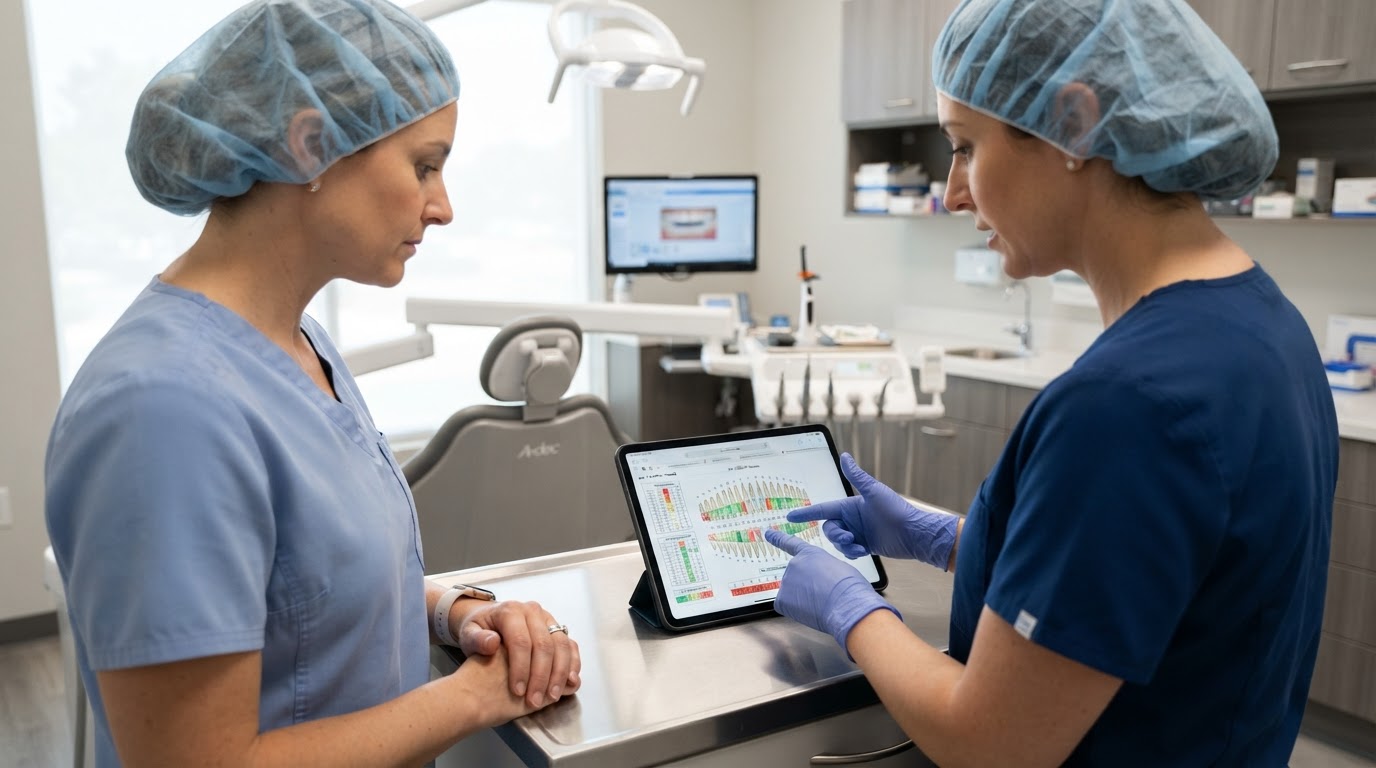
Why Standardization Matters
Probing depth measurements vary widely between clinicians. A standardized, six-points-per-tooth protocol reduces inter-examiner error and produces records that are reproducible across appointments and defensible in documentation.
A Consistent Technique
- Use a calibrated 15 mm probe with consistent tip diameter.
- Probe with light, controlled pressure of about 0.25 N.
- Walk the probe along the sulcus in 1-2 mm increments, six sites per tooth.
- Record bleeding on probing and suppuration immediately after probing.
Measuring Attachment Loss
Clinical attachment level (CAL) combines probing depth and gingival margin position to quantify true attachment loss. Calculating CAL is essential for staging periodontitis and tracking disease progression over time.
Practical Takeaway
Probe six sites per tooth with light, consistent pressure and record bleeding on probing at the moment of measurement. Pair probing depth with margin position to calculate true clinical attachment level.
Authoritative Dental Resources
Join the RDHPlanet Weekly Newsletter
Practical, evidence-aware insights for working dental hygienists. Delivered straight to your inbox every Sunday.
Related Articles
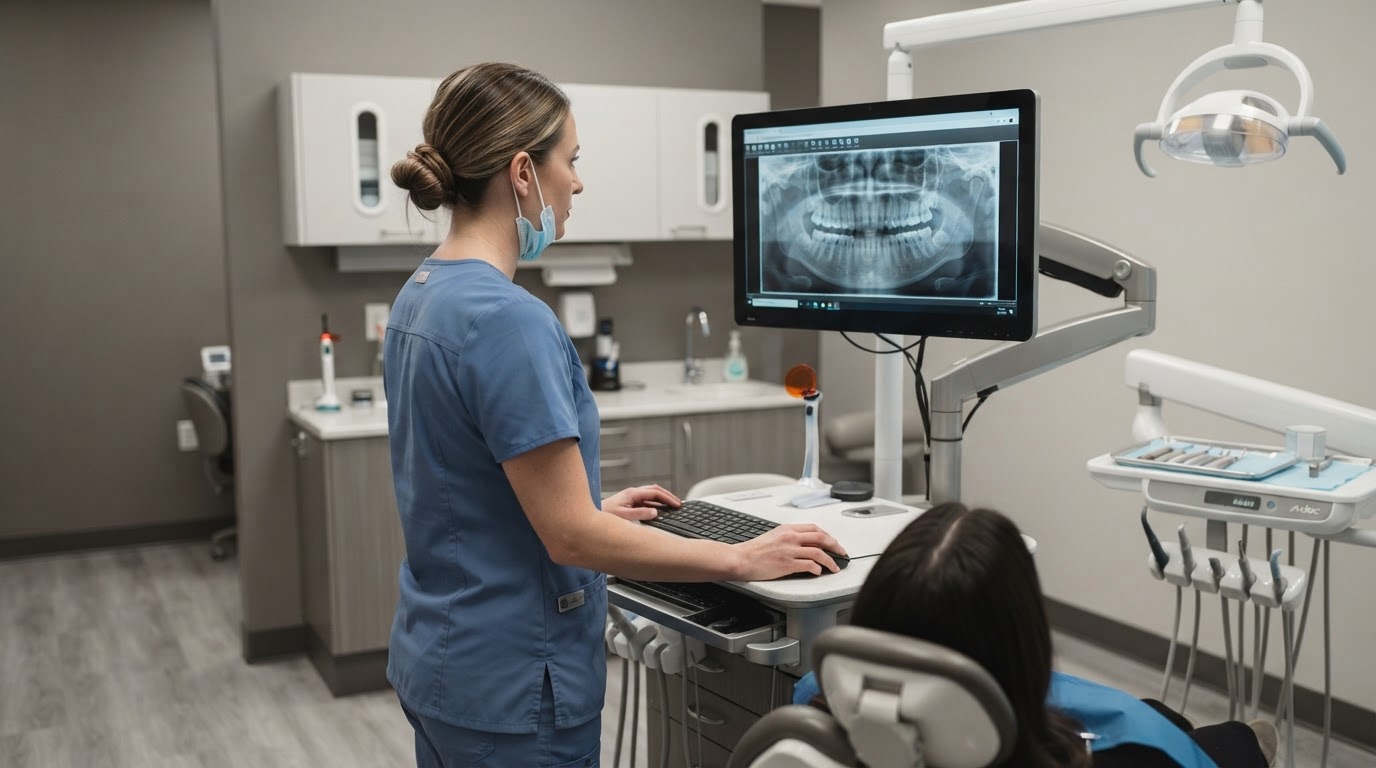
Radiographic Interpretation for Dental Hygienists
Sharpen image assessment skills to identify calculus, bone loss, and pathology and support the diagnostic workflow.
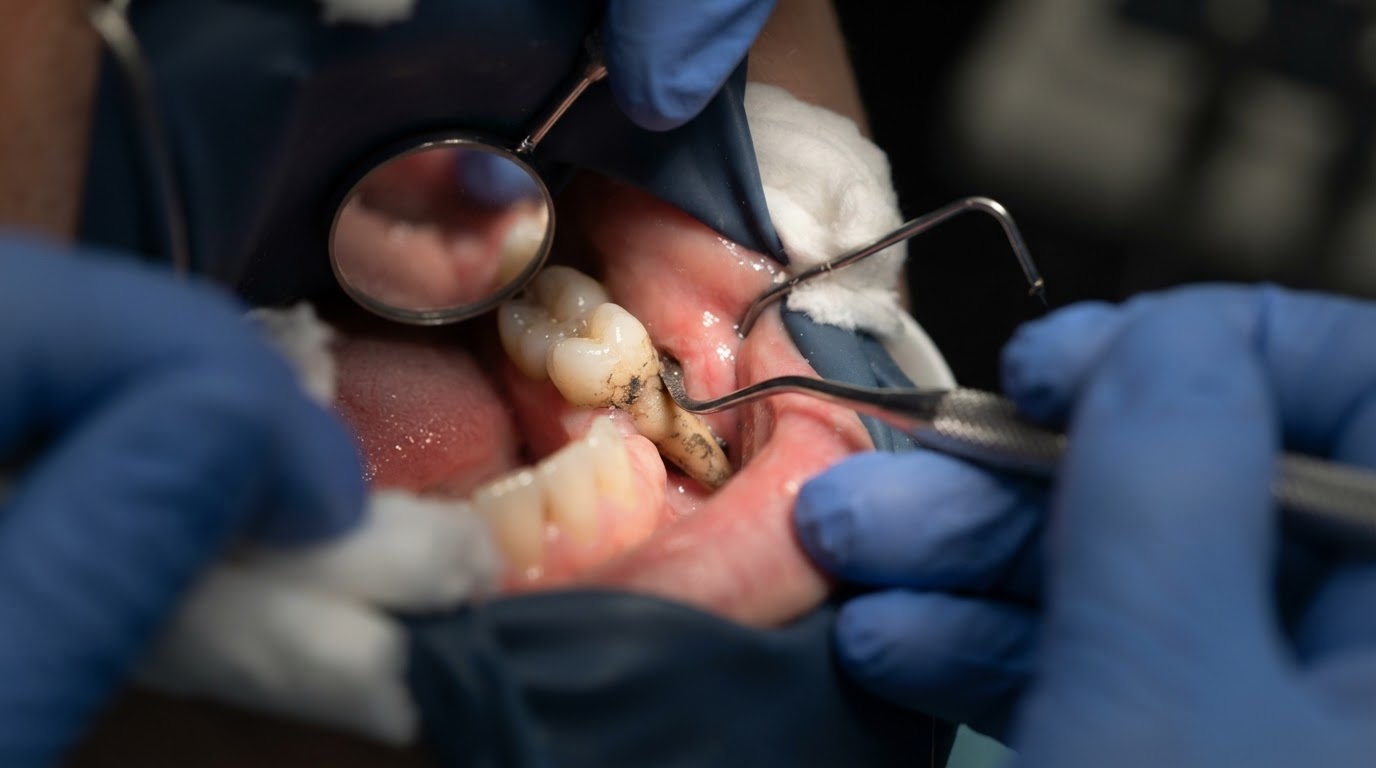
Gracey Curette Adaptation and Blade Angle Mastery
Master Gracey curette blade adaptation with correct working strokes, fulcrums, and site-specific instrument selection.