Gracey Curette Adaptation and Blade Angle Mastery
Master Gracey curette blade adaptation with correct working strokes, fulcrums, and site-specific instrument selection.
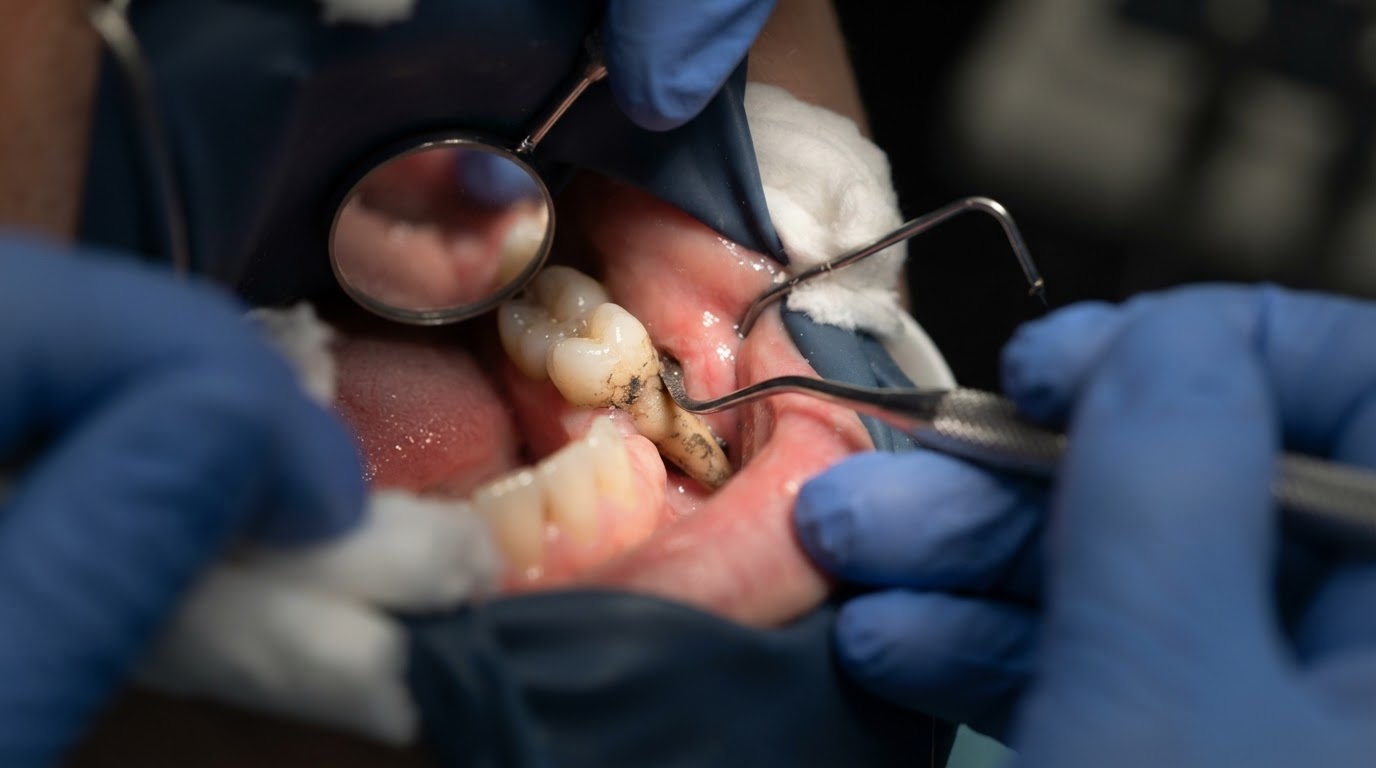
Understanding the Site-Specific Design
Graceys are area-specific: the blade is angled to adapt to a particular tooth surface. The lower shank bends toward the tooth surface being scaled, which means each instrument is paired to a specific arch and surface.
Matching the correct Gracey to the correct surface is the single most common technique error and the fastest to correct.
Blade Angle and Adaptation
- Aim for a 70-80 degree cutting angle against the tooth.
- Adapt the terminal 1-2 mm of the cutting edge only.
- Use a stable intraoral fulcrum close to the working site.
Working Stroke Mechanics
Use controlled, vertical or oblique strokes in a coronal direction. Lateral pressure should be firm but never cause the blade to slip. When you lose adaptation, stop and reposition rather than forcing the stroke.
Practical Takeaway
Adapt only the terminal 1-2 mm of the cutting edge at a 70-80 degree angle, and let a stable fulcrum close to the working site carry the lateral pressure.
Disclosure: This post may contain affiliate links. If you purchase through these links, RDHPlanet may earn a small commission at no additional cost to you. We only recommend products we use and trust clinically. See our affiliate disclosure for full details.
Authoritative Dental Resources
Join the RDHPlanet Weekly Newsletter
Practical, evidence-aware insights for working dental hygienists. Delivered straight to your inbox every Sunday.
Related Articles
Advanced Instrumentation Techniques for Stubborn Calculus
Evidence-based approaches to remove tenacious burnished calculus while minimizing operator fatigue and protecting root surfaces.
The Modified Pen Grasp: Ergonomics and Control
Refine your modified pen grasp to balance control and relaxation, reducing hand fatigue without sacrificing precision.