Achieving Neutral Seated Posture in the Operatory
Establish a neutral seated posture that protects your spine, shoulders, and wrists across a full day of patient care.
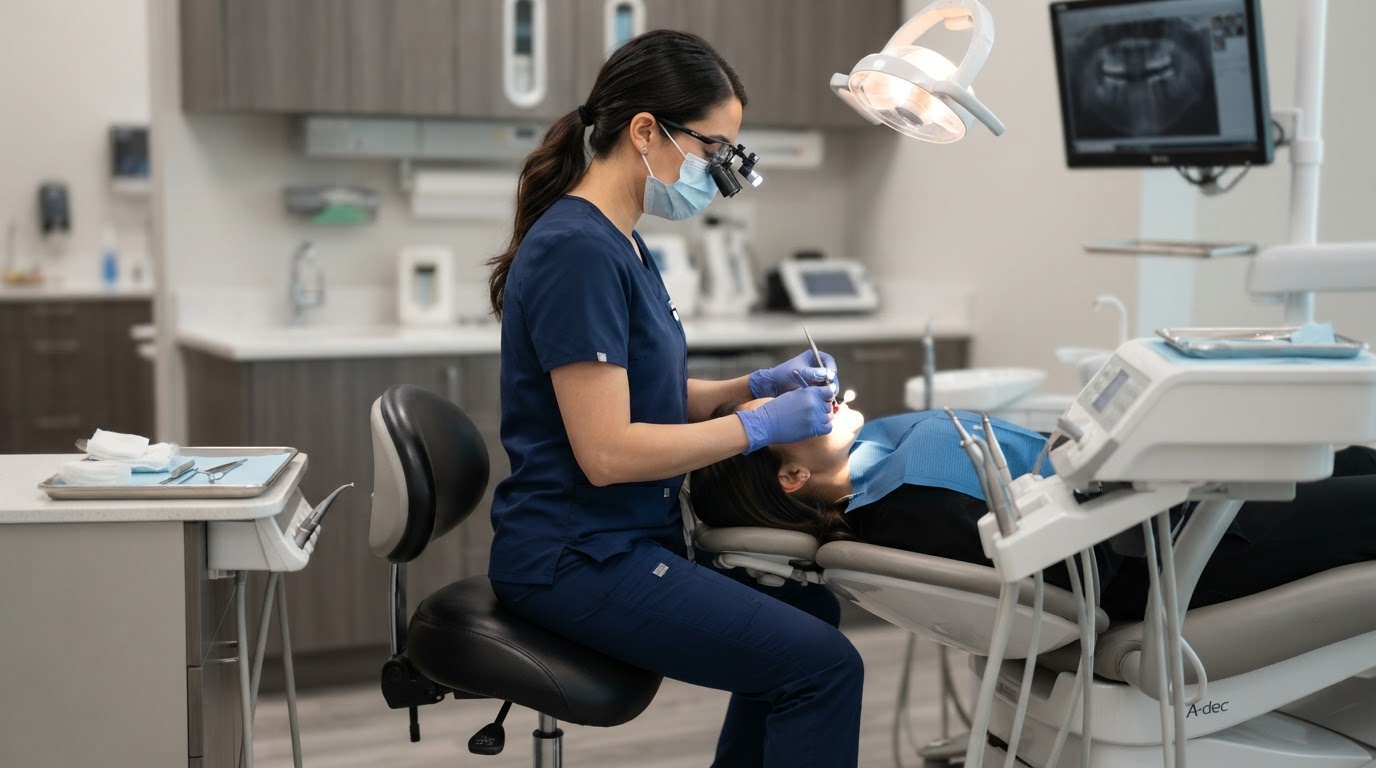
The Cost of Compromise
Sustained awkward posture is the leading driver of musculoskeletal pain among dental hygienists. A neutral seated position distributes load across balanced joints rather than concentrating it in the lower back and neck.
The Neutral Position
- Sit with hips slightly above knees and feet flat.
- Maintain a natural lumbar curve with the stool back supporting the lower back.
- Keep shoulders relaxed and elbows close to the body.
- Position the patient so your back and neck stay straight, not flexed forward.
Adjusting the Environment to You
Do not adapt your body to the equipment; adapt the equipment to your body. Adjust stool height, patient chair height, and overhead light before you begin so neutral posture is possible without strain.
Practical Takeaway
Establish neutral posture before every patient: hips above knees, natural lumbar curve, relaxed shoulders, and a patient position that keeps your neck straight.
Disclosure: This post may contain affiliate links. If you purchase through these links, RDHPlanet may earn a small commission at no additional cost to you. We only recommend products we use and trust clinically. See our affiliate disclosure for full details.
Authoritative Dental Resources
Join the RDHPlanet Weekly Newsletter
Practical, evidence-aware insights for working dental hygienists. Delivered straight to your inbox every Sunday.
Related Articles
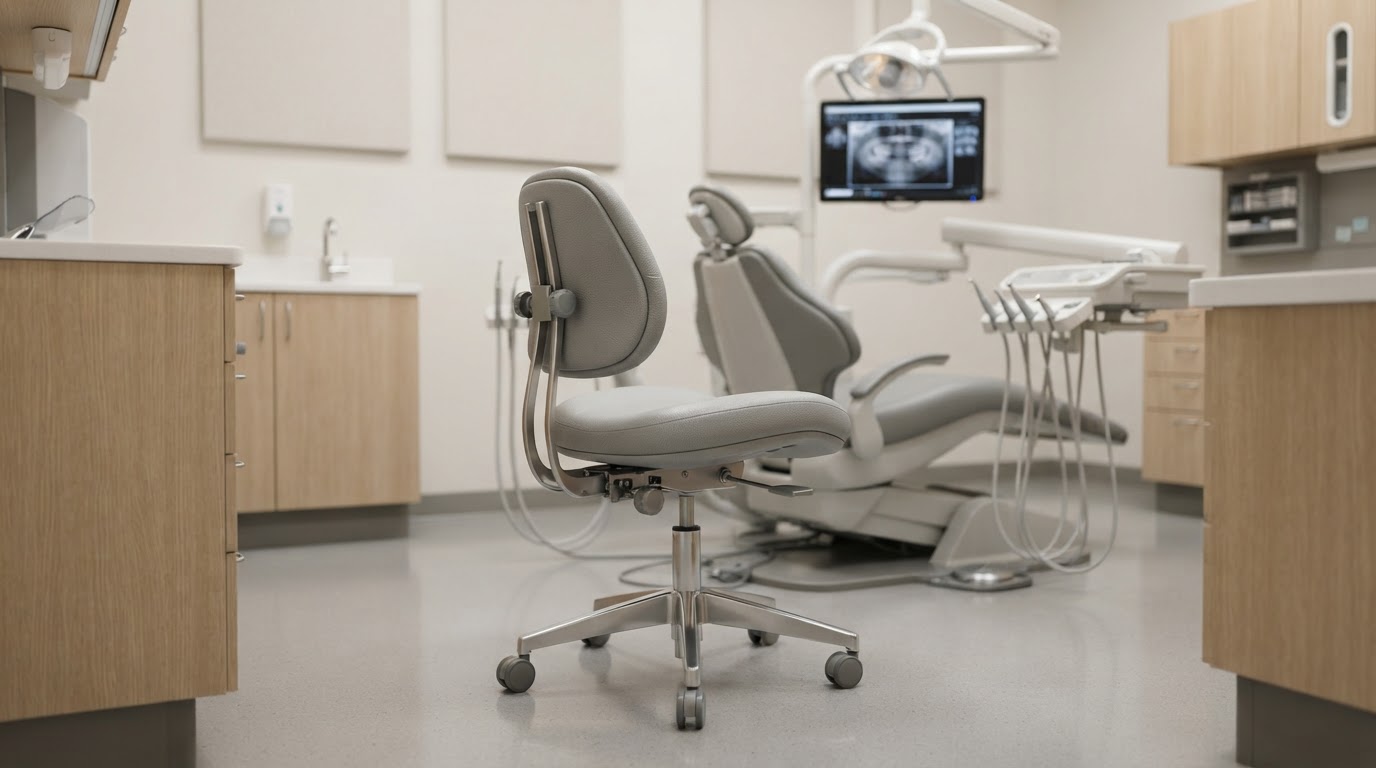
Saddle Stools and Posture: Saving Your Back
Evaluate whether a saddle stool supports your neutral posture, hip position, and reach during clinical care.
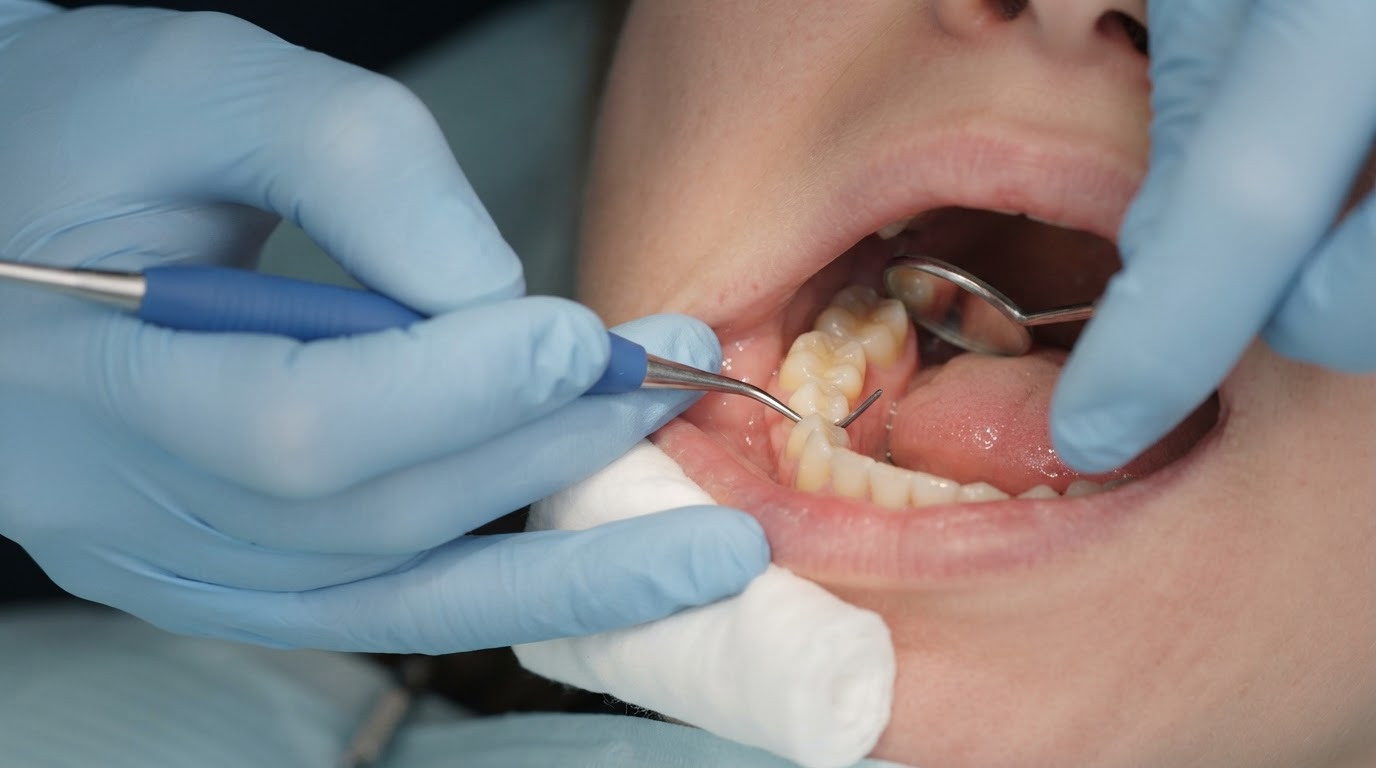
The Modified Pen Grasp: Ergonomics and Control
Refine your modified pen grasp to balance control and relaxation, reducing hand fatigue without sacrificing precision.