Saddle Stools and Posture: Saving Your Back
Evaluate whether a saddle stool supports your neutral posture, hip position, and reach during clinical care.
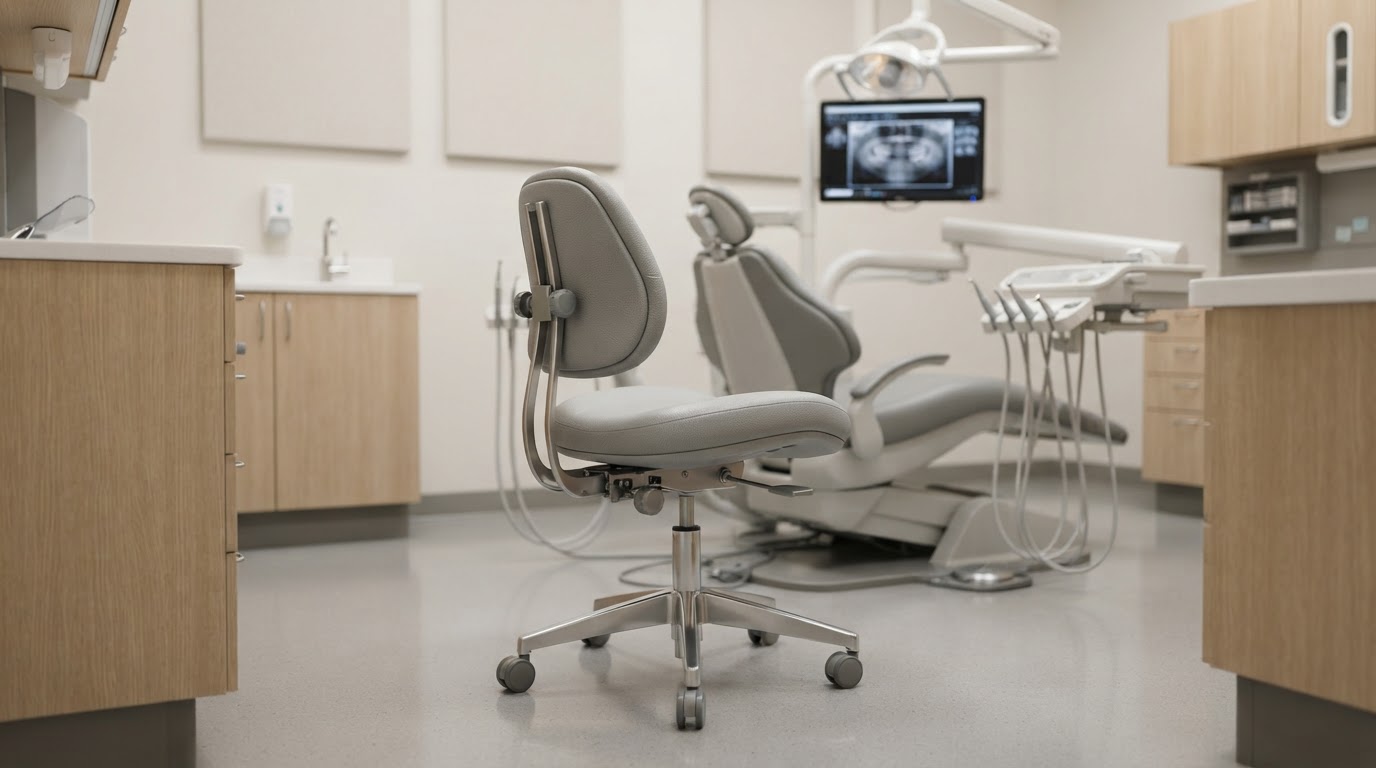
Why Hygienists Consider the Saddle Stool
A saddle stool positions the hips in a neutral, slightly abducted stance that can support the lumbar curve and reduce forward slumping. For many hygienists it is a meaningful upgrade over a flat traditional stool.
Evaluating Fit
- Confirm the seat height allows your feet to bear some weight.
- Check that the thigh angle opens the hip rather than compressing it.
- Ensure the seat width and contour suit your build and reach.
Transitioning Safely
Transition gradually. Saddle seating engages different stabilizers, and an abrupt full-day switch can create new soreness. Build tolerance over a week or two while checking that your posture stays neutral.
Practical Takeaway
A saddle stool can support neutral posture, but confirm the fit and transition gradually so new stabilizers adapt without creating fresh strain.
Disclosure: This post may contain affiliate links. If you purchase through these links, RDHPlanet may earn a small commission at no additional cost to you. We only recommend products we use and trust clinically. See our affiliate disclosure for full details.
Authoritative Dental Resources
Join the RDHPlanet Weekly Newsletter
Practical, evidence-aware insights for working dental hygienists. Delivered straight to your inbox every Sunday.
Related Articles
Achieving Neutral Seated Posture in the Operatory
Establish a neutral seated posture that protects your spine, shoulders, and wrists across a full day of patient care.
A Complete Operator Stool Adjustment Guide
Adjust every part of your operator stool, from seat height to backrest angle, to support sustained neutral posture.