Loupes and Headlight Setup for Postural Health
Select and adjust loupes and a headlight to improve visibility while protecting your neck and upper back.
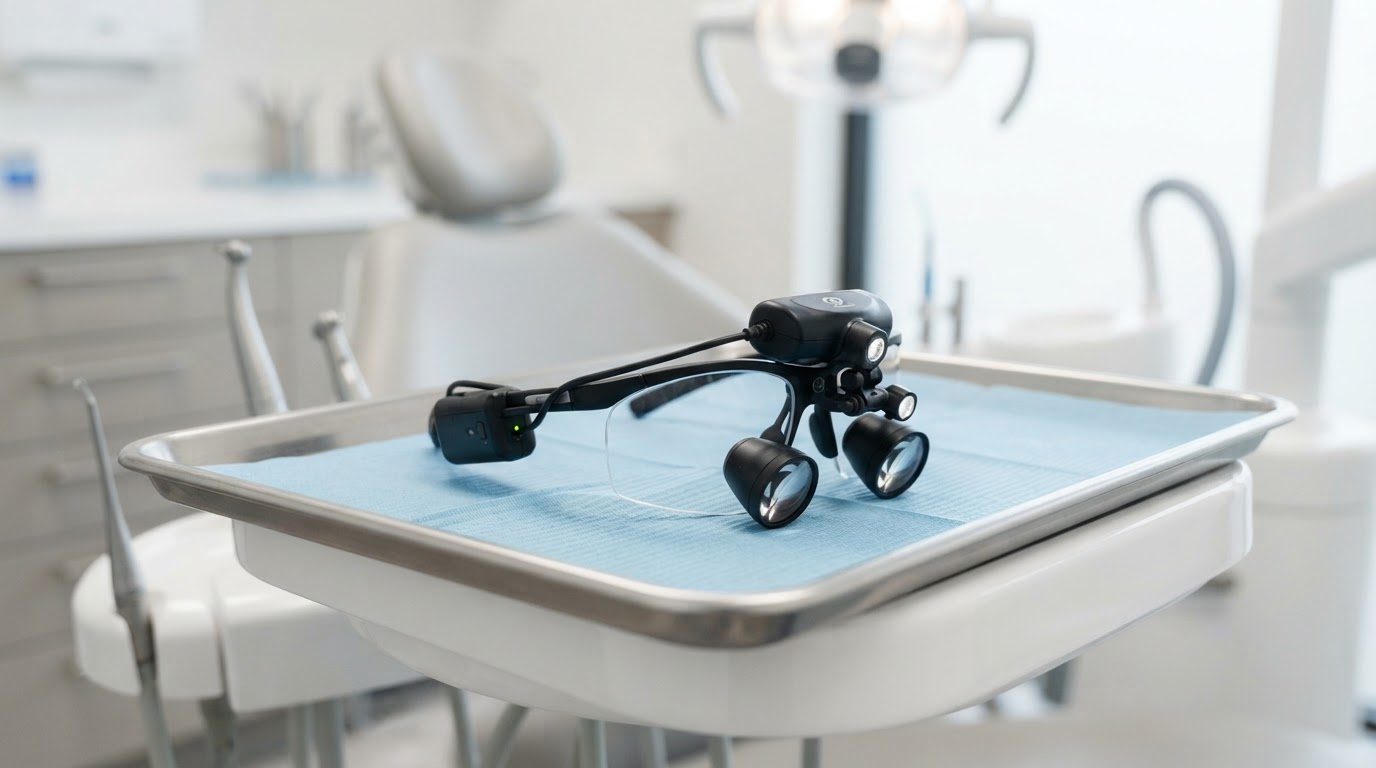
Magnification as an Ergonomic Tool
Loupes are not only for detail; they are an ergonomic intervention. Proper magnification reduces forward neck flexion, which is a primary contributor to cervical and upper back pain.
Working Distance and Declination
- Measure your true working distance with the patient in treatment position.
- Choose a declination angle that lets you see the field without tilting your head down.
- Pair loupes with a coaxial headlight so you stop twisting toward the overhead light.
Avoiding New Strain
Improperly fitted loupes create new strain. Have the working distance and declination measured professionally, and reassess if you change stools, patient position, or operator height.
Practical Takeaway
Treat loupes as an ergonomic tool: measure working distance with the patient in position, choose a declination that keeps your neck neutral, and pair with a coaxial headlight.
Disclosure: This post may contain affiliate links. If you purchase through these links, RDHPlanet may earn a small commission at no additional cost to you. We only recommend products we use and trust clinically. See our affiliate disclosure for full details.
Authoritative Dental Resources
Join the RDHPlanet Weekly Newsletter
Practical, evidence-aware insights for working dental hygienists. Delivered straight to your inbox every Sunday.
Related Articles
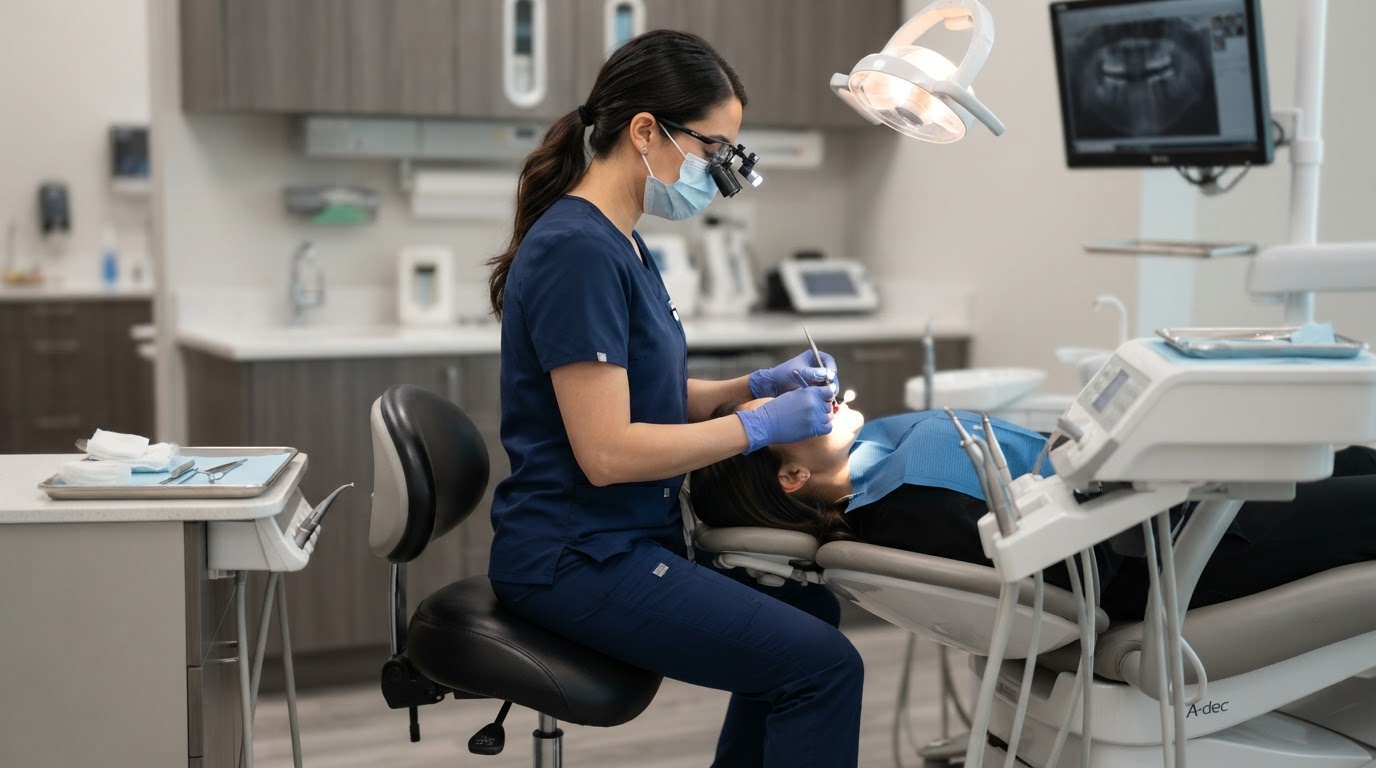
Achieving Neutral Seated Posture in the Operatory
Establish a neutral seated posture that protects your spine, shoulders, and wrists across a full day of patient care.
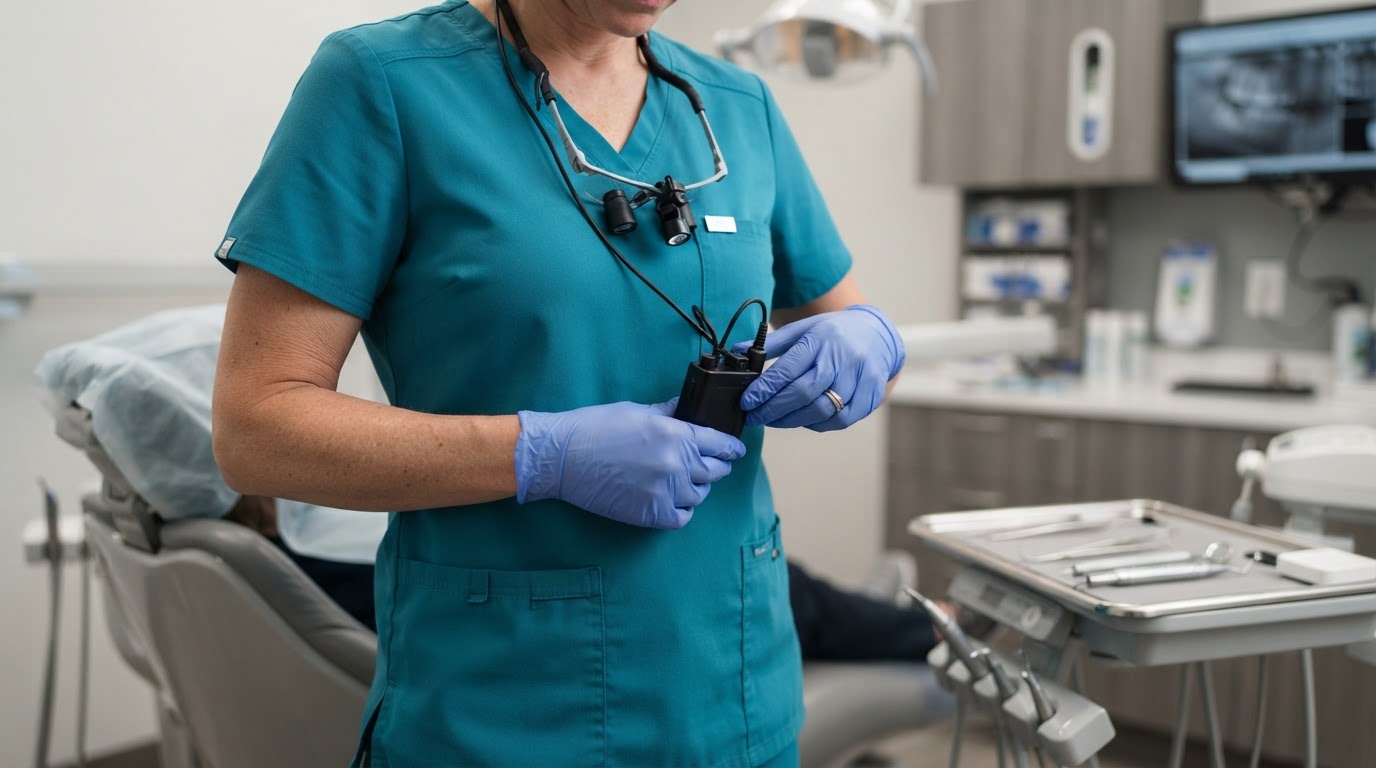
Headlight Battery and Cord Management for Hygienists
Manage headlight batteries and cords to avoid mid-procedure failures and cord drag that strains your posture.