Four-Handed Principles Applied to Hygiene
Apply four-handed dentistry principles to hygiene to reduce reach, save motion, and protect your musculoskeletal health.

Efficiency as Ergonomics
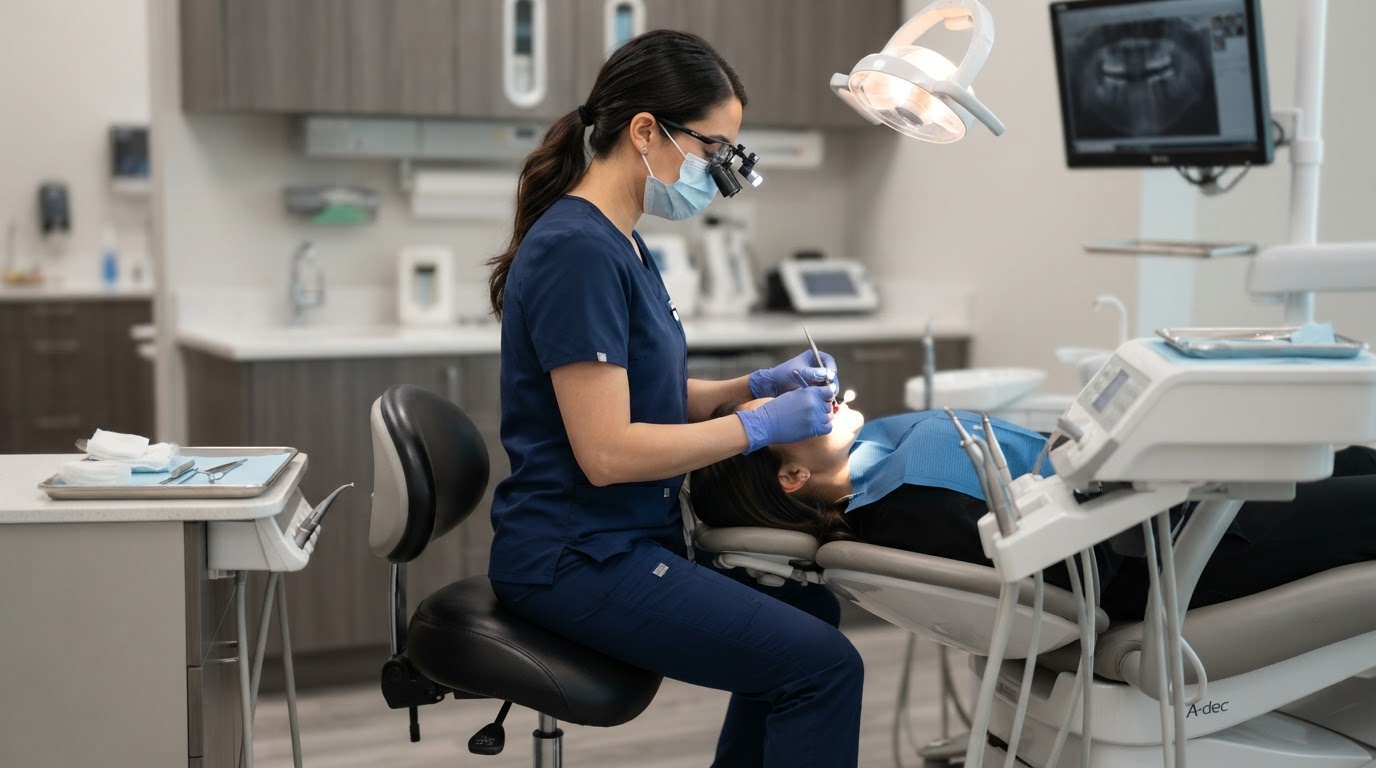
Four-handed dentistry is often framed as speed, but its real value is ergonomics. Reduced reach and fewer motions mean less cumulative strain across the day.
Core Principles
- Organize the tray in a consistent zone layout so instruments are within easy reach.
- Transfer instruments at the transfer zone to avoid reaching across the field.
- Use the assistant for evacuation and retraction to keep your posture neutral.
Adapting to Hygiene
Hygiene appointments differ from restorative work, but the principles transfer. Even without a dedicated assistant, disciplined tray organization and motion economy protect your body.
Practical Takeaway
Apply four-handed principles even in solo hygiene: organize the tray in consistent zones, transfer at the transfer zone, and use assistance for evacuation to reduce reach.
Authoritative Dental Resources
Join the RDHPlanet Weekly Newsletter
Practical, evidence-aware insights for working dental hygienists. Delivered straight to your inbox every Sunday.
Related Articles
Achieving Neutral Seated Posture in the Operatory
Establish a neutral seated posture that protects your spine, shoulders, and wrists across a full day of patient care.
Patient Positioning That Protects the Operator
Position the patient so you can work in neutral posture, reducing the forward flexion that drives operator strain.